|
MWF 11-12am SO 208 Spring 2019 Dr. Yancy Shirley Office hours: 10-12 Tu/Th + By Appointment Contact 
Syllabus Pre-reqs: PHYS 141/161H, MATH 129 Homework: 75%, Exams 25% A(>90%), B(>75%), C(>60%), D(>50%) Midterm: Feb 27th 11am Final Exam: May 6th 10:30-12:30 |
|
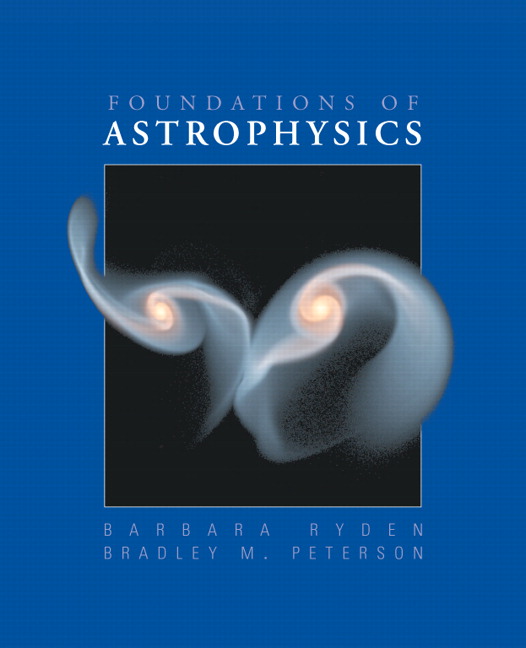
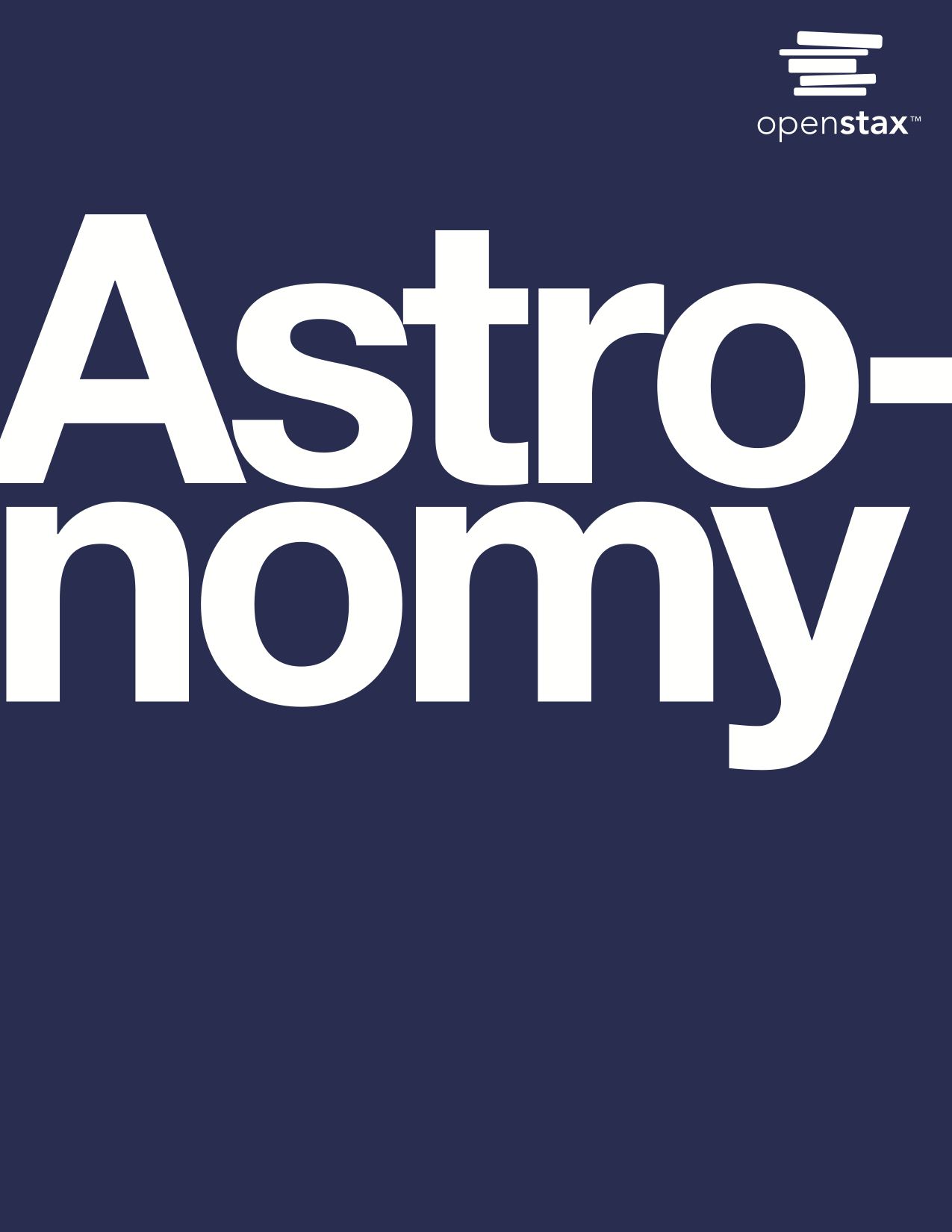
FA = Foundations of Astrophysics. As = Astronomy
| Date | Homework | Topic | Reading |
|---|---|---|---|
| W Jan 09 | Introduction (Slides) (Video) |
FA: | |
| As:Chapter 1 | |||
| F Jan 11 | Homework 1 | Distance and Angle (Board) (Slides) . |
FA: |
| As:Chapter 19.1-19.2 | |||
| M Jan 14 | Homework 2,3 | Sky Coordinate Systems (Board) (Slides) |
FA:Chapters 1.1-1.3 |
| As: Chapter 2.1 | |||
| W Jan 16 | Homework 4,5 | Local Siderial Time & Hour Angle (Board) (Slides) . |
FA: Chapters 1.4-1.6 |
| As: | |||
| F Jan 18 | FLANDRAU PLANETARIUM (SkyChart) |
||
| M Jan 21 | MARTIN LUTHER KING JR. DAY - NO CLASS |
||
| W Jan 23 | Homework 6,7 | Spherical Trig (Board.pdf) (Law of Cosines/Sines Derivation) . |
|
| F Jan 25 | Homework 8,9 | Properties of Light (Slides) |
FA: |
| As: Chapter 5.1-5.2 | |||
| M Jan 28 | Homework 10,11 | Flux & Luminosity (Board) |
FA: Chapter 13.2 |
| As: | |||
| W Jan 30 | FLANDRAU PLANETARIUM |
FA: | |
| As: | |||
| F Feb 01 | Homework 12 | Magnitudes (Board) (Slides) |
FA: Chapter 13.2 |
| As: Chapters 17.1-17.2 | |||
| M Feb 04 | Homework 13 | Blackbody Radiation (Board) (Slides) |
FA: pages 140-143 |
| As: Chapter 5.2 | |||
| W Feb 06 | Spectral Lines (Board) (Slides) |
FA: | |
| As: | |||
| F Feb 08 | Homework 14 | Virial Theorem (Board) |
FA: Chapter 3.4 |
| As: | |||
| M Feb 11 | Homework 15 | Stellar Energy Sources (Board) (Slides) (Video 1) (E=mc2 Video) |
FA: Chapter 15.2 |
| As: Chapter 16.1, | |||
| W Feb 13 | Homework 16 | Nucleosynthesis (Board) (Slides) (Video) |
FA: Chapter 15.3 |
| As: Chapters 15.1, 16.2-16.4 | |||
| F Feb 15 | Nucleosynthesis Cont. (Slides) |
FA: | |
| As: | |||
| M Feb 18 | Homework 17 | H-R Diagram (Slides) H-R Animation |
FA: Chapters 14.2-14.4 |
| As: Chapter 5.3-5.5, 18.4 | |||
| W Feb 20 | Homework 18 | Stellar Classification (Slides) (Video) |
FA: |
| As: | |||
| F Feb 22 | Homework 19 | Stellar Evolution (Slides) |
FA: Chapter 17.2 |
| As: Chapters 21.2 and 22 | |||
| M Feb 25 | Exam prep Practice Exam |
||
| W Feb 27 | MIDTERM |
||
| F Mar 01 | NO CLASS |
||
| M Mar 04 | SPRING BREAK |
||
| W Mar06 | SPRING BREAK |
||
| F Mar 07 | SPRING BREAK |
||
| M Mar 11 | Homework 20 | Stellar Death (Slides) |
FA: Chapter 18 |
| As: Chapter 23 | |||
| W Mar 13 | Homework 21 | Cepheids (Slides) |
FA: Chapter 17.3 |
| As: Chapters 19.3-19.4 | |||
| F Mar 15 | Homework 22,23 | Interstellar Dust (Slides) . |
FA: Chapter 20.3 |
| As: Chapter | |||
| M Mar 18 | Star & Planet Formation (Slides) (Simulation) . |
FA: Chapter 7.4, 14.3, 21.1-21.2 | |
| As: Chapter 8.3, 12.2 | |||
| W Mar 20 | Homework 24,25 | Kepler's 1st Law (Board) (Slides) (Ephemeris Generator) |
FA: Chapter 3.1 |
| As: Chapter 3.1.1 | |||
| F Mar 22 | Homework 26,27 | Kepler's 2nd & 3rd Laws (Board) |
|
| As: Chapter 3.1.2-3.1.3 | |||
| M Mar 25 | Homework 28 | Albedo (Board) (Slides) |
|
| As: Chapter 8.2 | |||
| W Mar 27 | Homework 29 | Gas Giants (Slides) (Titan Movie) . |
FA: Chapter 11, 12.1-12.3 |
| As: Chapter 10.2, 12.1 | |||
| F Mar 29 | Terrestrial Planets (Slides) |
FA: Chapter 7.1-7.3, 9, 10 | |
| As: Chapter 10.1 | |||
| M Apr 01 | Homework 30 | Asteroids, Kupier Belt, Comets (Slides) |
FA: Chapter 12.4, 13 |
| As: Chapter 11 | |||
| W Apr 03 | Homework 31 | Exoplanets RV Method (Slides) (RV Movie) |
FA: Chapter 21.3-21.6 |
| As: Chapter 12.3 - 12.4 | |||
| F Apr 05 | Homework 32 | Exoplanets Transit Method (Slides) (Transit Video) |
FA: Chapter |
| As: Chapter | |||
| M Apr 08 | Homework 33,34 | Redshift (Slides) (Board) |
FA: |
| As: Chapter 5.6 | |||
| W Apr 10 | Homework 35 | Hubble Law (Slides) (Board) . |
FA: Chapter 20.4-20.5 |
| As: Chapter 26.5 | |||
| F Apr 12 | Homework 36,37 | Dark Matter (Slides) |
FA: Chpater 19.2 |
| As: Chapter 28.4 | |||
| M Apr 15 | NO CLASS |
||
| W Apr 17 | Properties of Galaxies (Slides) Curtis-Shapley Debate Why Spiral Arms? |
FA: Chapter 20.1 - 20.4 | |
| As: Chapters 26.1-26.3 | |||
| F Apr 19 | Homework 38 | Evolution of Galaxies (Slides) |
FA: Chapter 21-22 |
| As: Chapter 27-28 | |||
| M Apr 22 | Homework 39 | Big Bang Cosmology (Slides) (CosmoCalc) |
FA: Chapter 23.1 |
| As: Chapter 29 | |||
| W Apr 24 | NO CLASS |
||
| F Apr 26 | Scale Factor (Slides) (Board) |
FA: Chapters 23.2, 23.4 | |
| As: | |||
| M Apr 29 | Evolution of Universe (Slides) (Board) |
FA: Chapter 24 | |
| As: | |||
| W May 01 | Evolution of Life/Astrobiology (Slides) |
FA: | |
| As: Chapter 8,30 | |||
| M May 06 | FINAL EXAM 10:30-12:30 |
||